

Part 6: Care, Investment Value, FAQs & Conclusion Preserving the Beauty, Meaning, and Legacy of Authentic Pichwai Paintings
Discover how to care for authentic Pichwai paintings, understand their artistic and cultural value, and make informed collecting decisions through practical guidance and essential FAQs.
An authentic Pichwai painting is created to be appreciated not only today, but for many years to come.
For collectors and international art lovers, owning a Pichwai painting can be a deeply rewarding experience. Its value may come from many dimensions—artistic craftsmanship, cultural heritage, devotional meaning, individuality, provenance, and the emotional connection it creates with its owner.
But beautiful traditional art also deserves thoughtful care.
Proper display, careful handling, a suitable environment, and an understanding of the artwork can help preserve its beauty and character for generations.
This final part of The Smart Buyer's Guide to Authentic Pichwai Paintings brings together practical care advice, considerations for collectors, frequently asked questions, and the principles that can help buyers make thoughtful decisions.
How to Care for an Authentic Pichwai Painting
A hand-painted Pichwai should be treated as a fine artwork rather than an ordinary decorative object.
Although the appropriate care may vary depending on the materials and painting medium, several general principles can help protect the artwork.
1. Protect the Painting from Prolonged Direct Sunlight
Strong and prolonged exposure to direct sunlight may affect colours and materials over time.
Whenever possible, display the artwork in a location where it receives controlled, indirect light.
A carefully selected position can allow the painting to remain visually prominent while reducing unnecessary exposure to harsh sunlight.
2. Avoid Excessive Moisture
Humidity and moisture can affect many traditional art materials.
Avoid placing a Pichwai painting in areas where it may regularly encounter:
Excessive humidity
Water vapour
Damp walls
Direct contact with water
Sudden environmental changes
A clean, stable indoor environment is generally preferable for long-term preservation.
3. Handle the Artwork Carefully
When moving a Pichwai painting, handle it with clean, dry hands and avoid touching painted areas unnecessarily.
If the artwork is large or elaborately detailed, professional assistance may be preferable when moving or installing it.
Careful handling reduces the possibility of accidental marks, bending, abrasion, or other physical damage.
4. Choose Appropriate Framing
A suitable frame can provide both protection and visual presentation.
For valuable or highly detailed artwork, collectors may wish to consult a professional framer who understands fine-art presentation and preservation.
The frame should complement the artwork rather than compete with it.
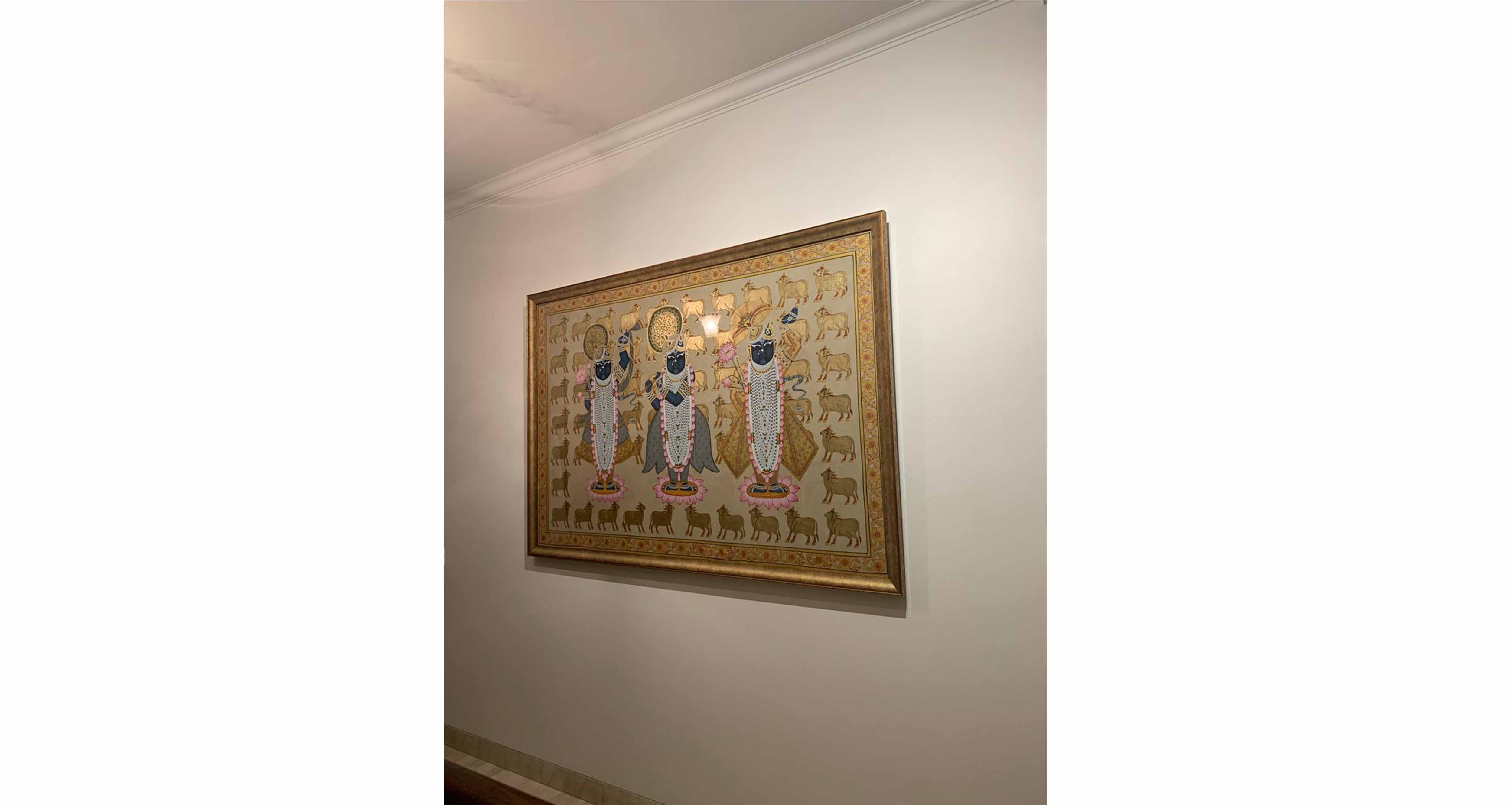
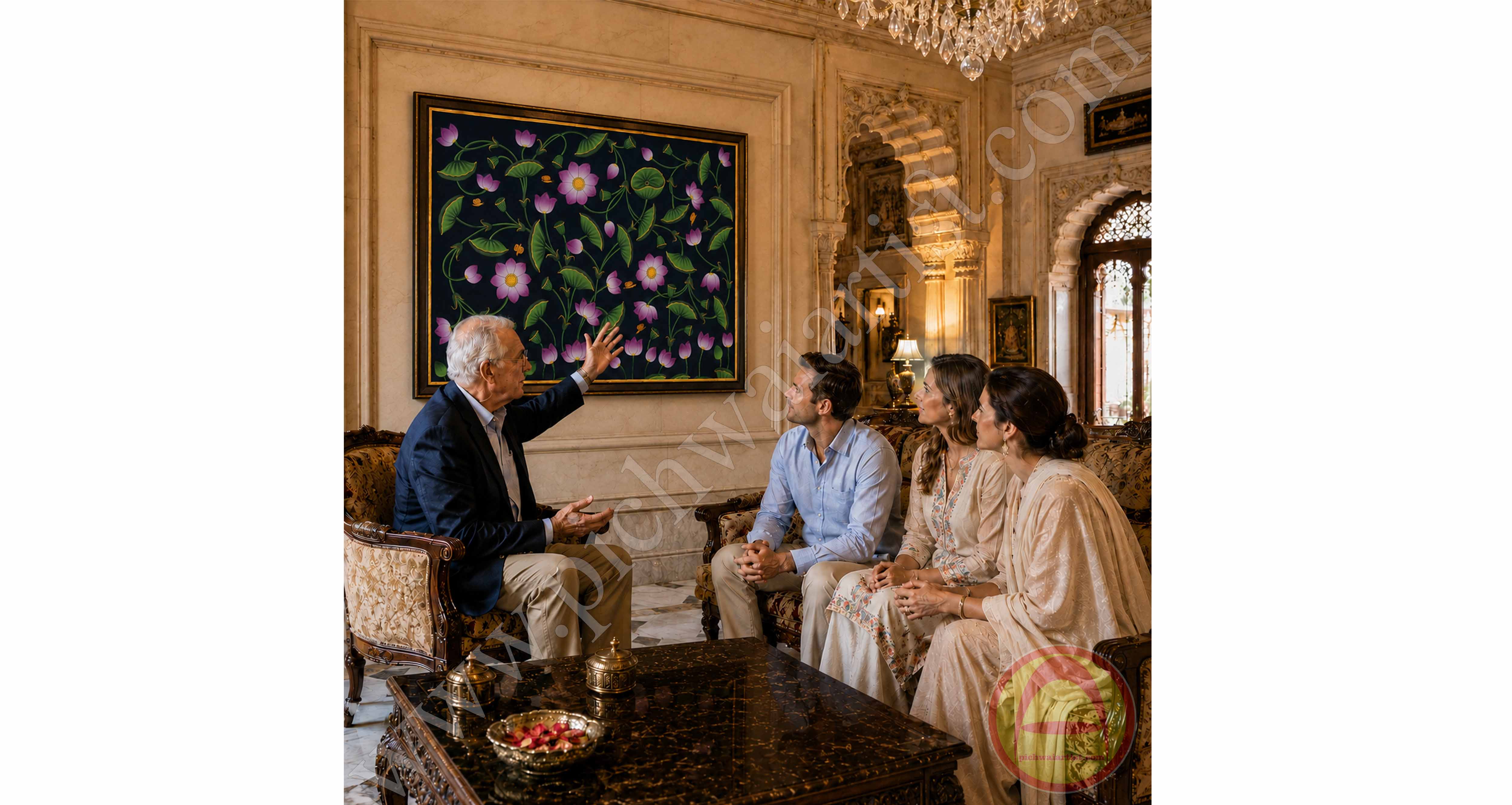
A well-presented Pichwai can become a powerful focal point in a residence, private collection, boutique hospitality space, or cultural interior.
5. Keep the Surface Free from Dust
Dust should never be aggressively rubbed across a painted surface.
If cleaning is necessary, follow the artist's or conservator's recommendations rather than experimenting with household cleaning products.
For valuable or historic works, professional conservation advice is the safest approach.
Creating the Right Environment for Your Pichwai
The environment surrounding an artwork contributes significantly to how it is experienced.
A Pichwai painting may be displayed in:
A private art collection
A living room
A library
A meditation or prayer space
A luxury residence
A boutique hotel
A cultural institution
An interior design project
Wherever it is displayed, the artwork should have enough visual space to be appreciated.
Avoid placing too many competing decorative objects around a highly detailed Pichwai.
Sometimes simplicity allows craftsmanship to speak for itself.
Understanding the Long-Term Value of Pichwai Art
The value of an authentic Pichwai painting cannot be reduced to a single number.
Collectors may consider several dimensions of value.
Artistic Value
The quality of composition, brushwork, detailing, colour harmony, technique, and overall execution contributes to the artistic importance of a painting.
Cultural Value
Pichwai represents a living Indian artistic tradition with deep connections to devotion, festivals, seasons, storytelling, and the Nathdwara tradition.
Craftsmanship Value
The time, patience, skill, and manual effort involved in creating a detailed hand-painted artwork contribute significantly to its character.
Emotional Value
A painting may become connected to a family, a spiritual journey, a special occasion, or an important period in someone's life.
Collecting Value
For serious collectors, factors such as the artist's reputation, provenance, condition, rarity, subject, quality, documentation, and market demand may influence how an artwork is regarded over time.
Is an Authentic Pichwai Painting an Investment?
An authentic Pichwai painting can be considered a collectible work of art, but buyers should distinguish artistic and cultural value from guaranteed financial investment.
No artwork should be purchased solely on the expectation that its price will increase.
A thoughtful collector may instead consider:
Quality of craftsmanship
Artistic originality
Condition
Provenance and documentation
Artist background
Subject and cultural significance
Rarity or uniqueness
Long-term personal connection
The reputation of the artist or source
The most rewarding art purchases often combine genuine appreciation with informed collecting.
Financial outcomes in the art market can never be guaranteed, and past prices do not guarantee future performance.
Why Provenance Matters
For collectors, provenance means understanding the history and origin of an artwork.
Depending on the artwork, useful documentation may include:
Artist information
Artwork title
Date or approximate period of creation
Dimensions
Materials and medium
Authenticity documentation
Purchase documentation
Exhibition history, where applicable
Previous ownership history, where available
Good documentation can become increasingly meaningful as an artwork becomes part of a long-term collection.
Why an Authenticity Certificate Can Be Valuable
An authenticity certificate or artist-signed documentation can provide useful information about a work.
The exact format may vary between artists and galleries, but a useful document may identify:
The artist
The artwork
Dimensions
Materials
Date of creation
Signature or identification
Relevant authenticity information
Collectors should always understand what a certificate actually confirms rather than assuming that every certificate has the same meaning.
Frequently Asked Questions About Authentic Pichwai Paintings
What is an authentic Pichwai painting?
An authentic Pichwai painting is a genuine artwork created within or inspired by the traditional Pichwai artistic heritage, with meaningful craftsmanship, composition, symbolism, and artistic execution. The exact materials and methods may vary according to the artist and the artwork.
Are all Pichwai paintings hand-painted?
No assumption should be made simply from the word "Pichwai."
Buyers should carefully read the artwork description and ask the artist or seller whether the artwork is entirely hand-painted, partially hand-painted, printed, or produced using another process.
Clear communication allows buyers to understand exactly what they are purchasing.
How can I identify a hand-painted Pichwai?
Look closely at the artwork's brushwork, fine detailing, layering, composition, colour relationships, and individual artistic expression.
However, photographs alone may not always provide enough information. Asking clear questions about the creation process can provide additional context.
What materials are used in Pichwai paintings?
Materials vary according to the artist and artistic practice.
Traditional and contemporary Pichwai artists may work on prepared cloth, canvas, paper, or other suitable surfaces and may use different painting mediums.
The most reliable approach is to ask for the specific materials used in the artwork you are considering.
How long does it take to create a Pichwai painting?
There is no single standard timeframe.
The duration depends on the size, complexity, composition, level of detailing, technique, and working process of the artist.
Highly detailed hand-painted works can require many weeks or even months of dedicated effort.
Why are Pichwai paintings so detailed?
Detail is an important part of the visual language of traditional Pichwai art.
Flowers, cows, peacocks, garments, jewellery, borders, architecture, and other motifs can be carefully developed to create a rich and harmonious composition.
The level of detail also reflects the patience and discipline involved in the artistic process.
What are the most common Pichwai themes?
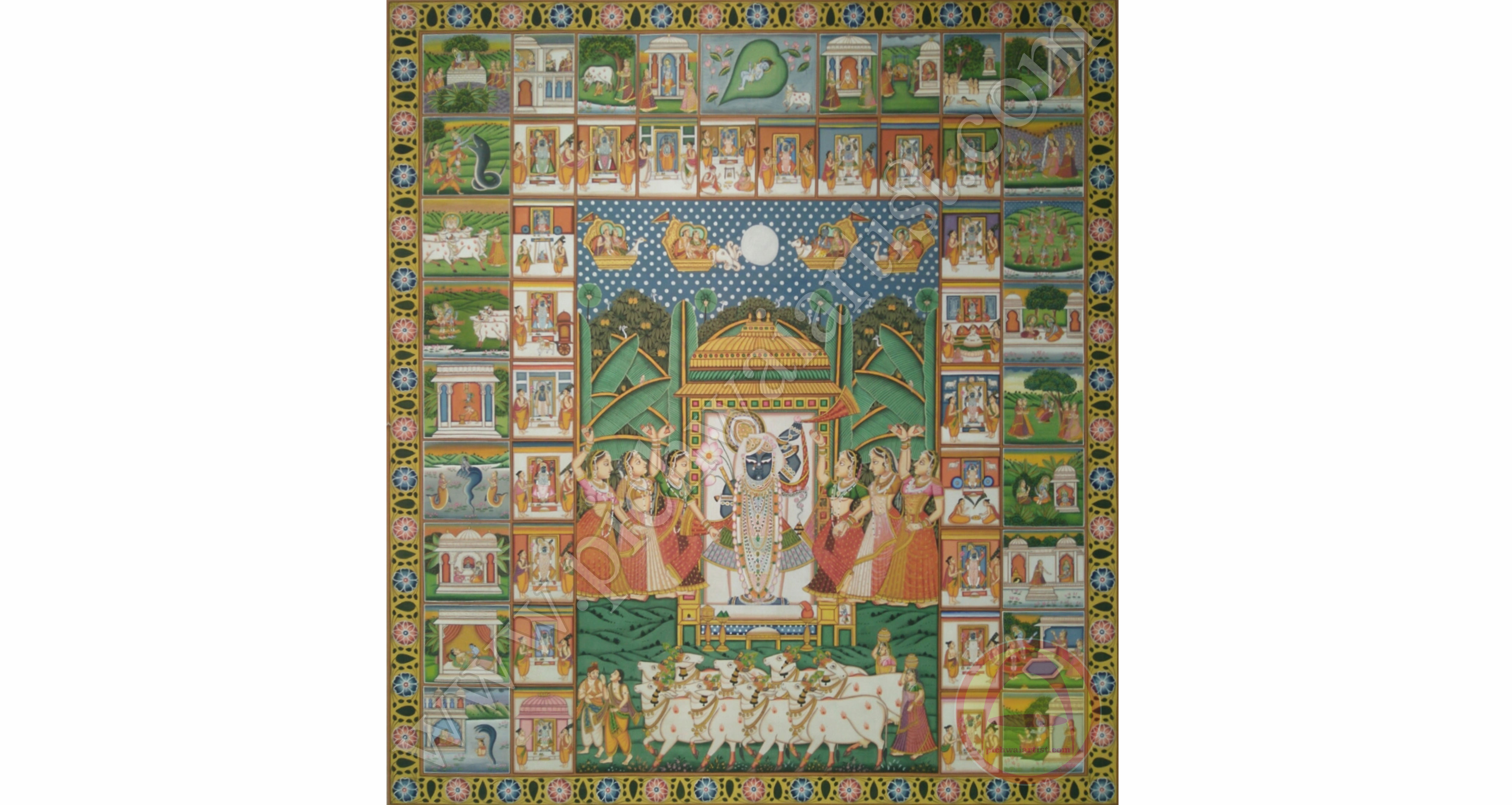
Pichwai paintings commonly explore themes connected with Shrinathji, Krishna devotion, festivals, seasons, nature, sacred cows, lotus flowers, peacocks, Govardhan Hill, temple traditions, and other devotional subjects.
Different themes may be associated with particular festivals, seasons, or devotional contexts.
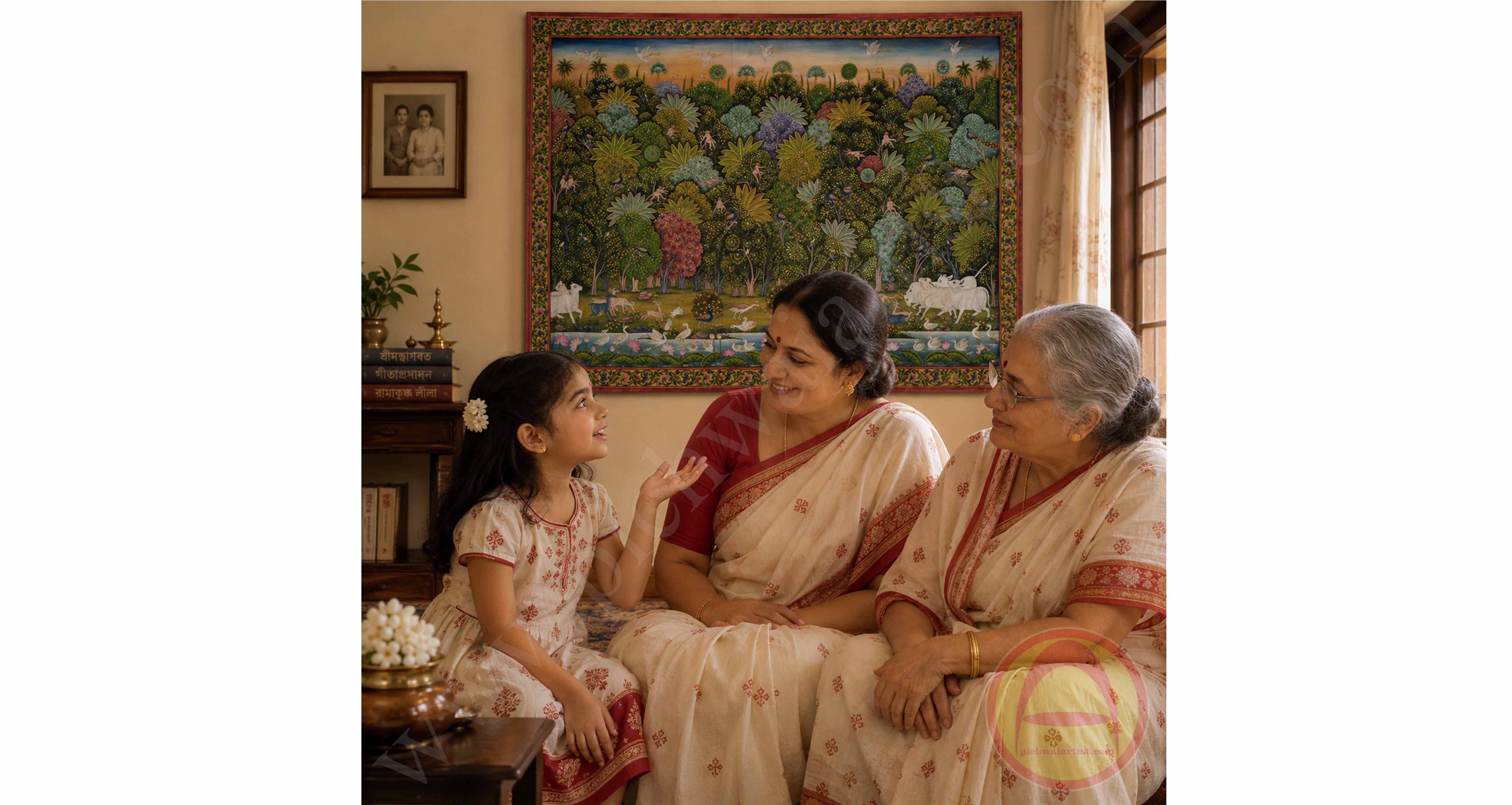
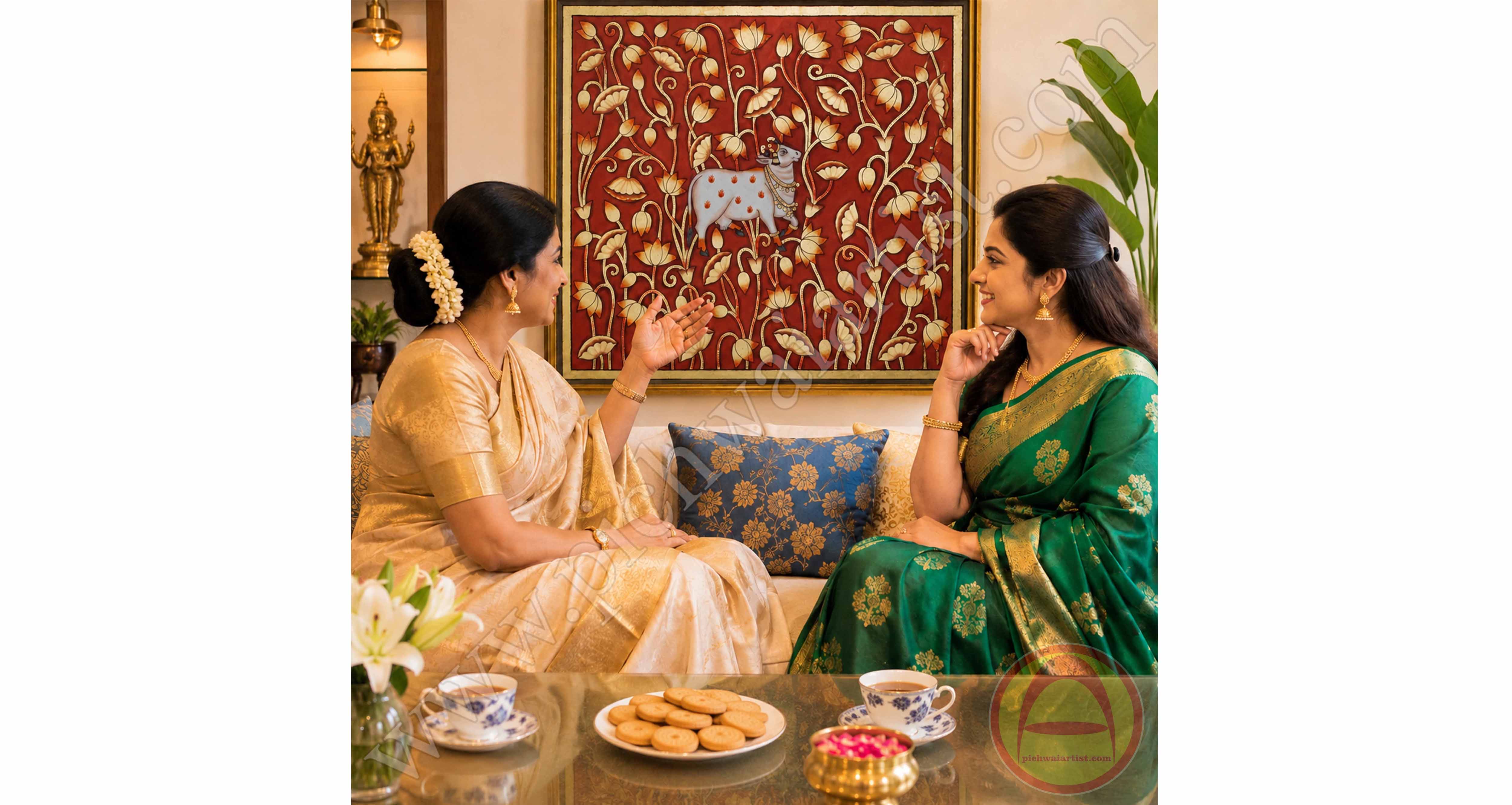
Can Pichwai paintings be used in modern interiors?
Absolutely.
The strong composition, sophisticated colour relationships, and intricate craftsmanship of Pichwai art can complement both traditional and contemporary interiors.
A carefully selected Pichwai can become a distinctive focal point without losing its cultural identity.
Is Pichwai art suitable for international collectors?
Yes.
Pichwai has a strong visual and cultural language that can be appreciated by collectors around the world.
For international buyers, understanding the artwork's subject, materials, dimensions, craftsmanship, documentation, shipping requirements, and care instructions can make the collecting experience more rewarding.
What should I ask before buying a Pichwai painting online?
Consider asking:
Is the artwork entirely hand-painted?
Who created the artwork?
What materials were used?
What is the size?
What is the subject or traditional theme?
How long did it take to create?
Is authenticity documentation available?
How will the artwork be packed?
What care does it require?
What is the return or purchase policy?
A transparent conversation helps buyers make informed decisions.
Should I buy a Pichwai because it may increase in value?
It is better to purchase art primarily because you genuinely appreciate it.
Although some artworks may become more desirable over time, no seller or guide can guarantee future financial appreciation.
Choose quality, authenticity, craftsmanship, cultural significance, and personal connection first.
What makes a Pichwai painting meaningful to a collector?
Meaning is personal.
For one collector, it may be the devotional story.
For another, it may be the craftsmanship.
For someone else, it may be the connection to Indian heritage, family traditions, spirituality, or the beauty of the composition.
The strongest collecting relationships often develop when an artwork has meaning beyond its decorative appearance.
The Smartest Way to Buy Authentic Pichwai Art
A smart buyer does not need to become an art historian before purchasing a Pichwai.
A little knowledge can make a significant difference.
Understand the story.
Ask about the materials.
Observe the craftsmanship.
Study the details.
Learn about the artist.
Understand the documentation.
Ask questions.
Take your time.
Then choose the artwork that genuinely speaks to you.
This approach transforms buying from a simple transaction into an informed cultural and artistic experience.
A Pichwai Can Become Part of Your Legacy
The greatest beauty of traditional art is its ability to travel through time.
A Pichwai painting purchased today may eventually become part of a family's story.
It may hang in a home for decades.
It may be passed to children.
It may travel to another country.
It may become part of a private collection.
Or it may simply remain a treasured reminder of a meaningful moment.
This is why choosing an authentic artwork deserves thought and care.
Conclusion: Choose with Knowledge, Collect with Appreciation
Authentic Pichwai paintings represent much more than decorative beauty.
They bring together:
Devotion.
Craftsmanship.
Heritage.
Storytelling.
Artistic discipline.
Cultural identity.
A thoughtful buyer does not simply ask, "How beautiful is this painting?"
They also ask:
Who created it?
How was it created?
What does it represent?
What makes it special?
How can it be preserved?
Those questions lead to deeper appreciation.
The purpose of this six-part guide has never been to tell a buyer which artist, gallery, or seller to choose.
Its purpose is simpler and more meaningful:
To give every collector the knowledge needed to make a confident and informed decision.
When buyers understand authenticity and craftsmanship, genuine artistic excellence has a better opportunity to be recognized and appreciated.
And when collectors choose thoughtfully, they help ensure that India's remarkable Pichwai tradition continues to inspire future generations.
Begin Your Pichwai Journey with Knowledge
Whether you are searching for your first Pichwai painting or building an international collection, take the time to understand the artwork before you purchase it.
Look beyond decoration.
Discover the story.
Appreciate the craftsmanship.
Ask meaningful questions.
And choose a work of art that you will be proud to live with—and perhaps one day, pass on.
Authentic Pichwai is not simply something to own. It is a tradition to appreciate, preserve, and carry forward. Thank you 💐💐
Created by-
Arun Sharma
Pichwai Painting Artist
Contact- +91 72969 76088 (WhatsApp)