

Colors of Devotion: The Making of Pichwai Discover the traditional art, sacred symbolism, natural colors, meticulous craftsmanship, and devotional spirit behind an authentic handmade Pichwai
Discover the fascinating making of Pichwai painting—where sacred colors, intricate details, traditional craftsmanship, and devotion come together to create a timeless work of Indian art. Explore the artistry, symbolism, and patience behind authentic handmade Pichwai paintings.
Hi,
Pichwai is more than a painting.
It is devotion translated into color, faith transformed into form, and centuries of artistic tradition preserved on cloth.
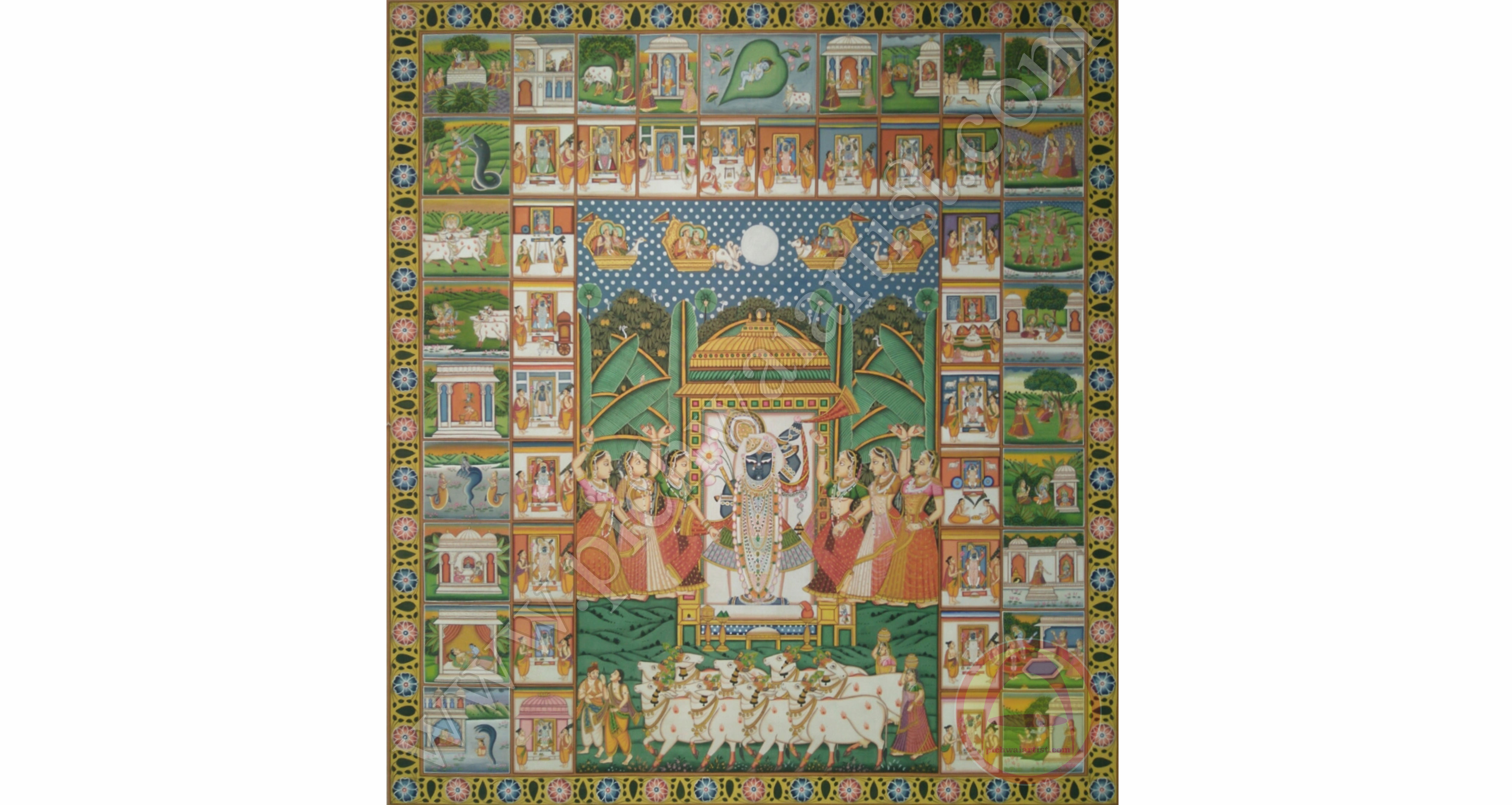
Created traditionally for the sacred spaces associated with Shrinathji and the Vaishnava tradition, Pichwai paintings bring together spirituality, storytelling, symbolism, craftsmanship, and an extraordinary understanding of color. Every lotus, cow, peacock, ornament, flower, and divine figure has a visual language of its own.
But what makes an authentic Pichwai truly special is not simply what appears on the finished surface.
It is how the painting is created.
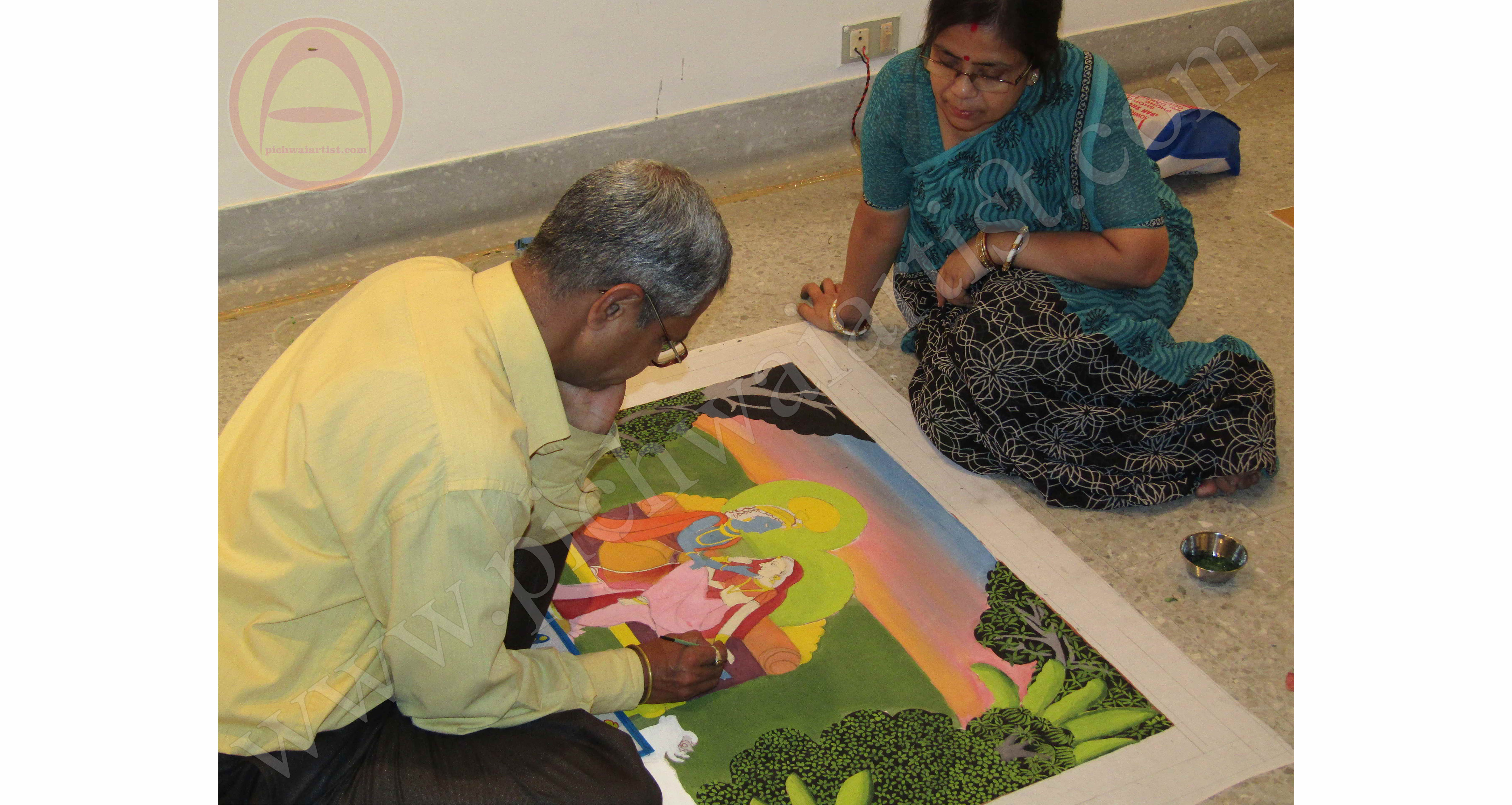
From preparing the painting surface to drawing intricate outlines, building layers of color, adding fine details, and completing delicate ornamental work, the making of a Pichwai requires patience, discipline, and years of artistic experience.
The Soul of Pichwai Lies in Its Colors
The colors of Pichwai are not chosen merely for decoration.
They create atmosphere, establish symbolism, and help communicate devotion.
Deep blues can evoke the divine presence of Krishna. Greens may suggest nature, fertility, and the sacred landscape. Brilliant reds and oranges can bring warmth and festive energy, while whites create purity and visual balance. Gold details add a sense of sacred richness and illumination.
In traditional Pichwai painting, color is therefore not simply a visual element.
Color becomes part of the story.
This is one reason authentic handmade Pichwai paintings have such a distinctive presence. Their beauty comes not only from the palette but from the relationship between color, composition, symbolism, and craftsmanship.
Preparing the Canvas: Where the Journey Begins
Before the artist begins painting, the surface must be prepared carefully.
Traditionally, Pichwai paintings were created on cloth. The fabric needed to provide a suitable foundation for detailed drawing and painting. Preparing the surface was therefore an important part of the artistic process.
The artist works toward creating a smooth and stable painting ground that can accept multiple layers of color and fine detailing.
This stage may appear simple to a viewer, but it is fundamental.
A beautifully finished Pichwai begins with a carefully prepared foundation.
The First Lines: Bringing the Composition to Life
Once the surface is ready, the composition begins to emerge.
The artist carefully establishes the placement of the principal divine figure and surrounding elements. Depending on the theme, the composition may include Shrinathji, Krishna, cows, lotus flowers, peacocks, trees, creepers, gopis, architectural elements, or seasonal motifs.
Traditional Pichwai compositions often have a strong sense of balance.
Nothing is placed randomly.
The arrangement of flowers, animals, foliage, borders, and divine elements creates a visual rhythm that guides the viewer's eye through the painting.
The first drawing is therefore much more than an outline.
It is the architectural foundation of the entire artwork.
Layer by Layer: The Making of Color
One of the most fascinating aspects of handmade Pichwai painting is the gradual development of color.
The artist does not simply fill empty spaces with paint.
Colors are built carefully, often through multiple stages.
A large background area may first establish the overall mood of the painting. Additional layers then strengthen the depth and richness of the surface. Smaller elements are painted progressively until the composition begins to feel complete.
This patient process gives handmade Pichwai paintings their visual depth.
The surface may contain hundreds or even thousands of individual artistic decisions.
Every stroke matters.
The Sacred Language of Flowers
Flowers are among the most recognizable elements of Pichwai art.
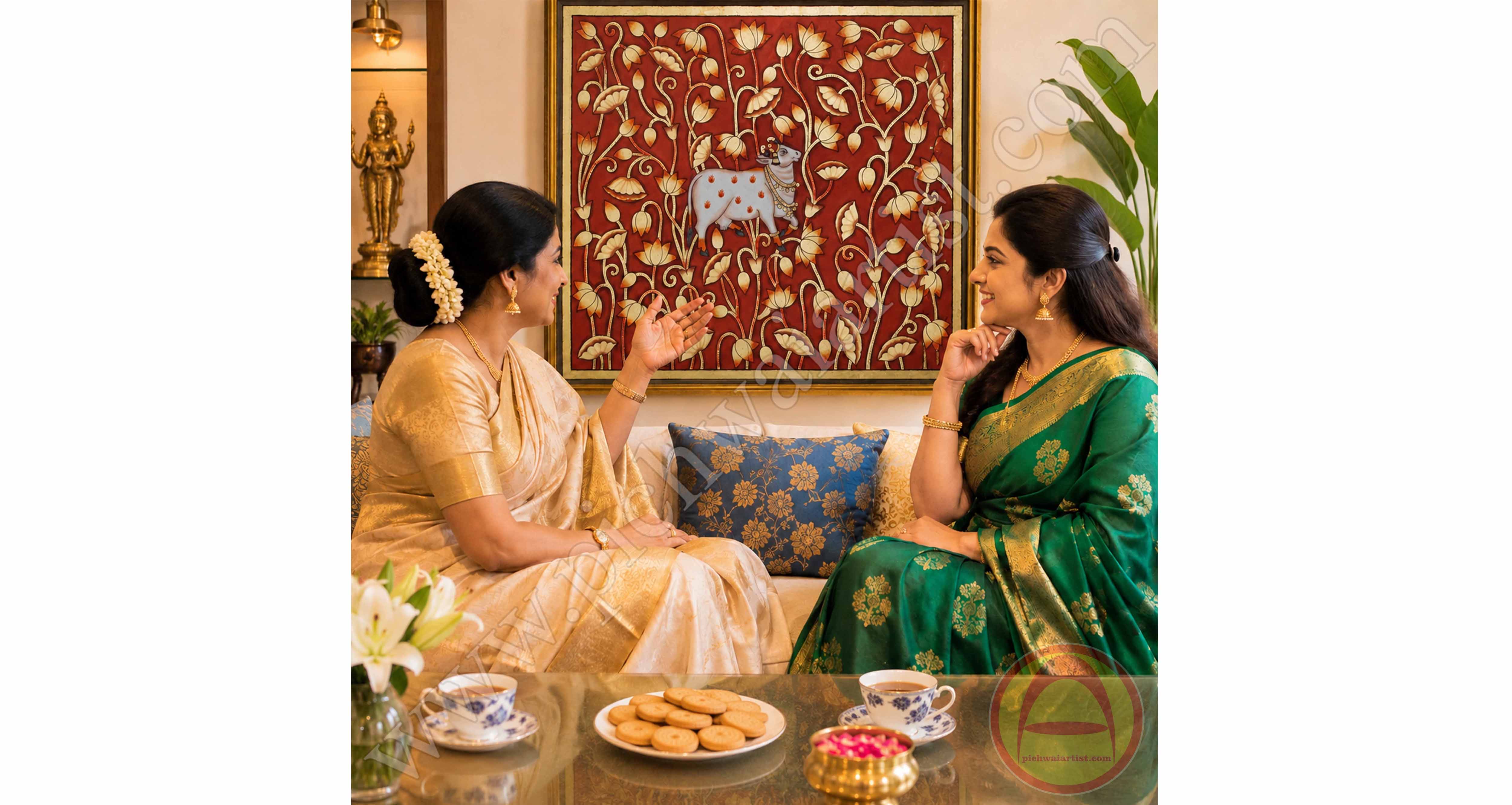
The lotus holds particular importance in Indian artistic and spiritual traditions and appears frequently in Pichwai compositions. Lotus ponds, garlands, flowering plants, and elaborate floral arrangements can transform the entire background into a symbolic sacred landscape.
But painting flowers in Pichwai is not as simple as it may appear.
A single floral element may require carefully controlled outlines, repeated shapes, fine internal details, tonal variations, and precise placement.
When hundreds of flowers are brought together, the artist creates a visual world that feels abundant, harmonious, and alive.
Cows, Peacocks and the Sacred Landscape
Pichwai is also celebrated for its beautiful depiction of nature.
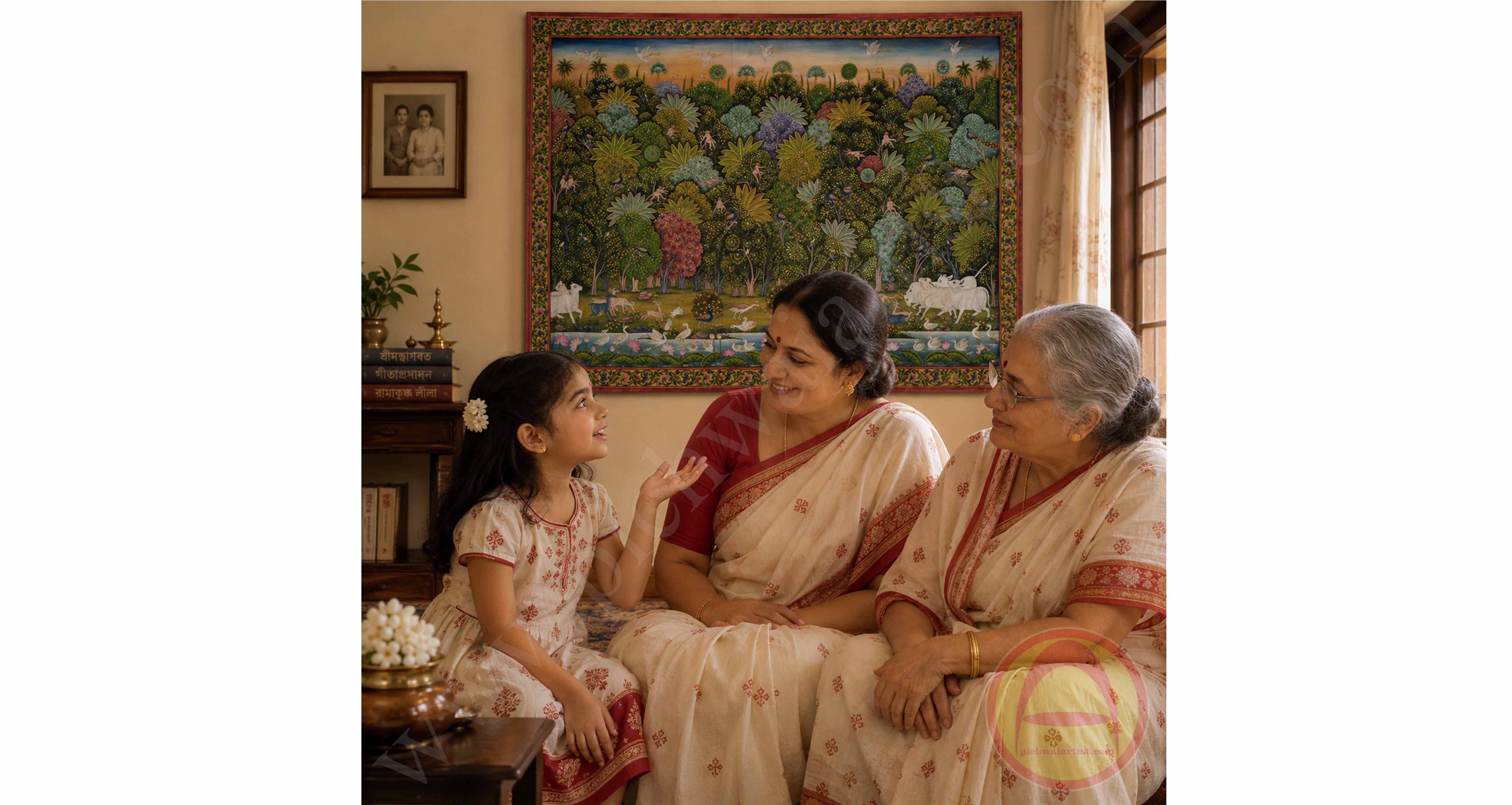
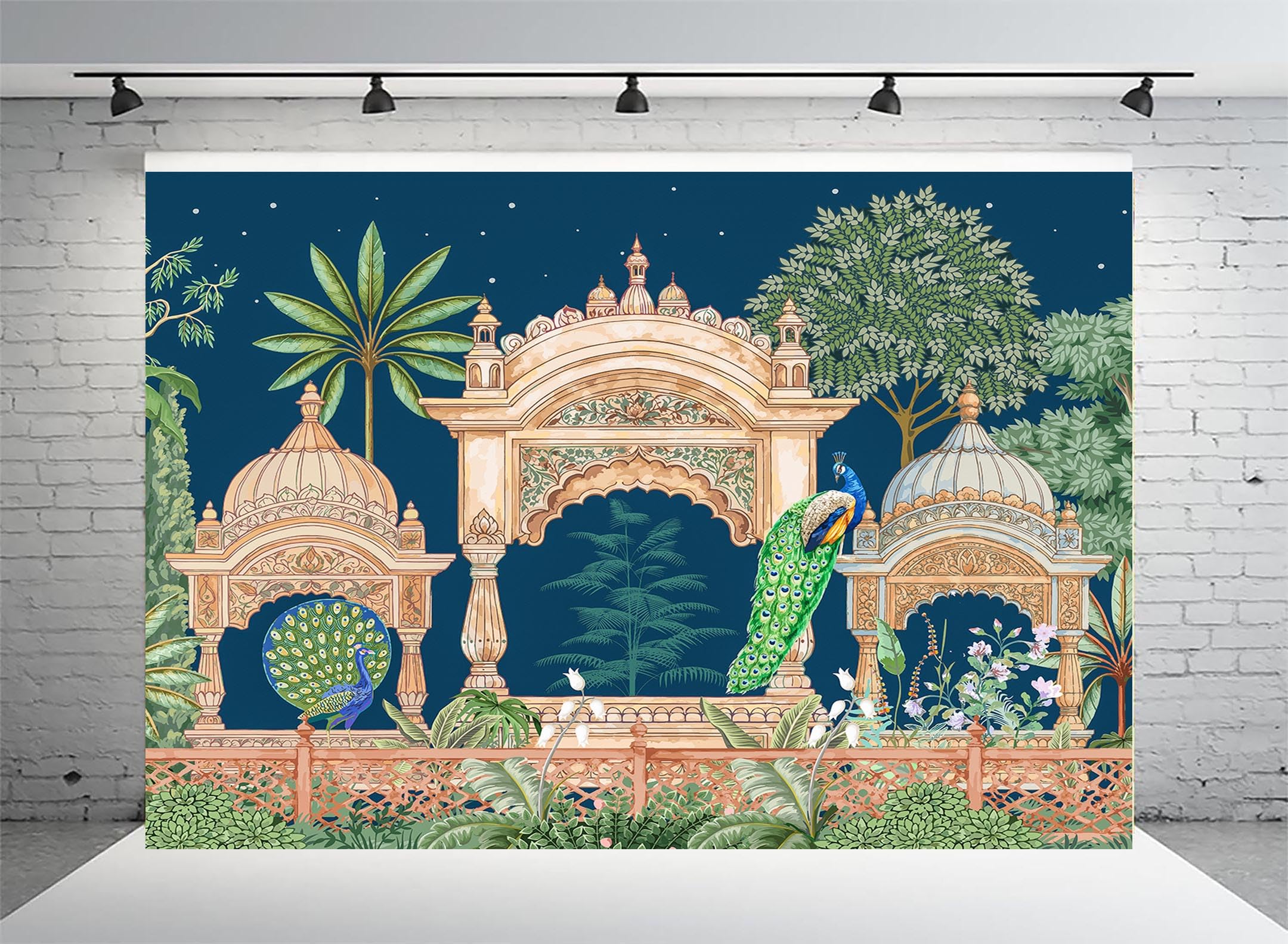
Cows represent an important part of Krishna's visual world. Peacocks bring movement, elegance, and color. Trees, leaves, vines, flowers, and water elements create an environment in which the divine narrative unfolds.
These elements are not merely decorative fillers.
They help establish the Vrindavan-inspired spiritual landscape associated with Krishna's devotional imagery.
An accomplished Pichwai artist must therefore understand not only painting techniques but also the visual vocabulary of the tradition.
Fine Detailing: Where Patience Becomes Art
After the major forms and colors are established, the most demanding stage begins.
Fine detailing.
This is where the personality of the artist becomes especially visible.
Tiny lines, ornamental patterns, facial details, jewellery, textile decorations, flower centres, leaves, feathers, borders, and other miniature elements require an extremely steady hand.
A small mistake can disturb the visual harmony of a highly detailed composition.
That is why traditional Pichwai painting is a discipline of patience.
The artist must remain focused through countless hours of repetitive yet highly precise work.
Gold and the Language of Light
Gold has long been associated with sacred richness in Indian art.
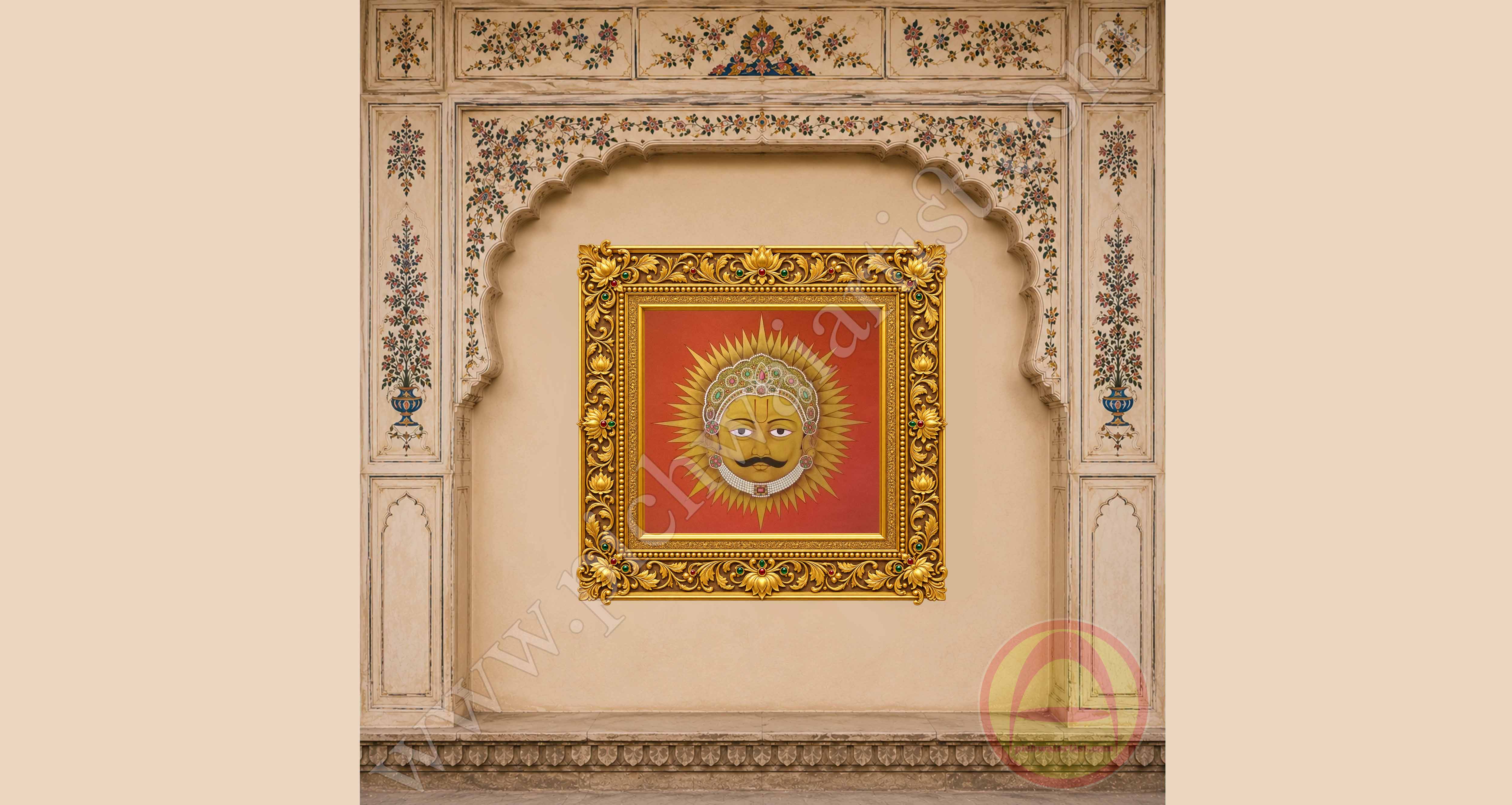
In Pichwai, golden details can highlight ornaments, borders, jewellery, divine attributes, or architectural elements.
Used thoughtfully, gold does more than make a painting appear luxurious.
It creates the impression of light.
When it catches the ambient light, a carefully finished golden detail can make the painting appear to change subtly throughout the day.
This interaction between pigment, surface, light, and space is one of the qualities that makes traditional Indian paintings so captivating.
Every Pichwai Tells a Story
A Pichwai painting is rarely just a beautiful arrangement of colors.
It can represent a particular devotional mood, season, festival, temple tradition, or episode connected with Krishna and Shrinathji.
Different themes may introduce different costumes, flowers, landscapes, compositions, and decorative elements.
This means that understanding Pichwai requires looking beyond the surface.
The real question is not only:
“What does this painting show?”
It is also:
“What does this painting mean?”
That is where the cultural depth of Pichwai begins to reveal itself.
Handmade Pichwai vs. Printed Reproductions
In today's world, Pichwai-inspired designs are available in many forms, including printed artworks, digital reproductions, decorative textiles, and mass-produced products.
These can make the visual language of Pichwai accessible to a wider audience.
However, a handmade Pichwai painting is fundamentally different.
An original handmade artwork carries the physical evidence of the artist's hand.
The small variations in line, pigment application, detailing, texture, and finish become part of the character of the artwork.
A print reproduces an image.
A handmade painting preserves an artistic process.
For collectors interested in authentic Indian traditional art, this distinction is important.
Why Authentic Pichwai Matters
Authenticity is not simply about price.
It is about preserving knowledge.
When an authentic handmade Pichwai is purchased, the value extends beyond the physical artwork. It supports the continuation of artistic skills, traditional visual vocabulary, craftsmanship, and cultural knowledge.
Every genuine handmade painting represents time.
It represents practice.
It represents the artist's understanding of composition, color, symbolism, and technique.
And most importantly, it represents a living connection between India's artistic heritage and the contemporary world.
Pichwai as a Living Tradition
Pichwai has survived because it has never been only an object of the past.
It continues to inspire artists, collectors, designers, galleries, museums, architects, and art lovers around the world.
Contemporary Pichwai artists are exploring new scales, compositions, color palettes, materials, and presentation styles while continuing to respect the visual language of the tradition.
This balance between heritage and artistic evolution is essential for the future of Pichwai.
A tradition remains alive when it is respected, understood, practiced, and allowed to grow.
The Artist's Time Is Part of the Artwork
One of the most overlooked aspects of handmade art is time.
A finished Pichwai may appear effortless when viewed from a distance.
But behind that surface are hours of preparation, drawing, painting, detailing, correction, refinement, and finishing.
The viewer sees the final painting.
The artist remembers every stage that created it.
This is why handmade Pichwai should not be judged only by its dimensions or the amount of material used.
Its true value also lies in the knowledge, labour, patience, and devotion embedded within it.
From Sacred Tradition to Contemporary Collecting
Today, Pichwai paintings are finding an increasingly wider audience beyond traditional devotional spaces.
Collectors are discovering their extraordinary decorative power, historical significance, craftsmanship, and cultural depth.
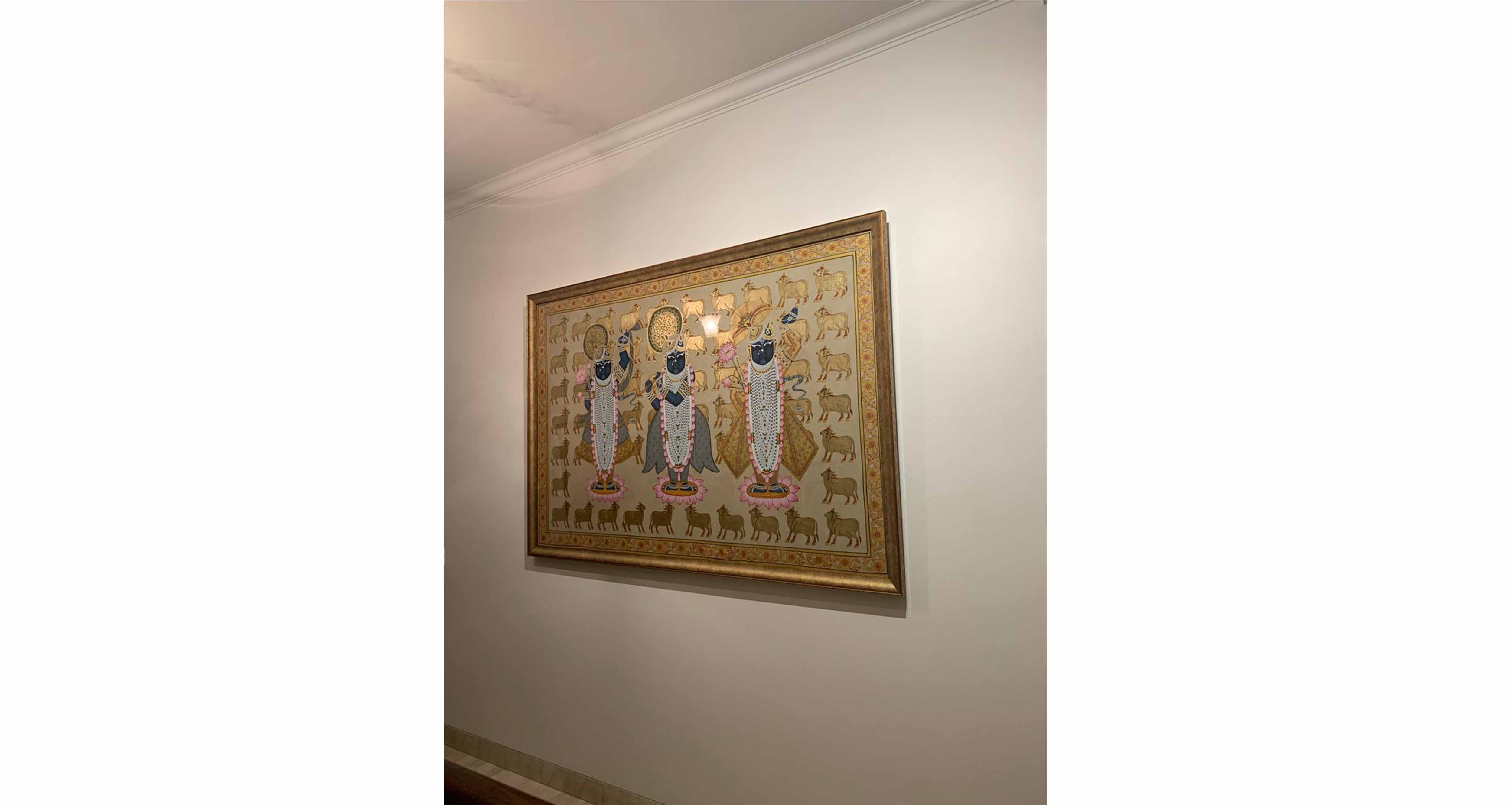
A well-created Pichwai can become a powerful focal point in a contemporary home, private collection, luxury interior, gallery, museum, or cultural institution.
Yet its spiritual identity remains intact.
That combination of Indian heritage, devotional symbolism, craftsmanship, and contemporary artistic appeal makes Pichwai uniquely positioned within the world of traditional Indian art.
The Colors of Devotion
Ultimately, the making of Pichwai is a journey from a blank surface to a sacred visual universe.
The artist begins with a simple foundation.
Then come the first lines.
Then color.
Then flowers.
Then cows and peacocks.
Then ornaments, borders, textures, and countless delicate details.
Layer by layer, the painting becomes more than an image.
It becomes an expression of devotion.
This is why the colors of Pichwai feel different.
They are not merely colors chosen by an artist.
They carry memory, symbolism, craftsmanship, and faith.
The true beauty of Pichwai lies not only in what the eyes see, but in what the painting preserves.
It preserves a tradition.
It preserves artistic knowledge.
It preserves devotion.
And when an authentic handmade Pichwai enters a collection, it carries that story forward into another generation.
Discover the Art Behind an Authentic Pichwai
If you are looking for an authentic handmade Pichwai painting, take time to understand the artwork before purchasing it.
Look closely at the drawing, detailing, surface, composition, craftsmanship, and artistic character.
Ask about the artist.
Ask how the artwork was made.
And most importantly, learn to distinguish a handmade original from a printed reproduction.
Because when you collect an authentic Pichwai, you are not simply buying a decorative painting.
You are bringing home a piece of India's living artistic heritage.
Explore Authentic Pichwai Paintings
Discover traditional and contemporary handmade Pichwai artworks created with respect for the artistic heritage, devotional symbolism, and detailed craftsmanship of this extraordinary Indian painting tradition.
Pichwai Painting Artist — Since 1983
Visit: https://pichwaiartist.com
Thank you 💐💐
Created by-
Arun Sharma
Pichwai Painting Artist
Contact- +91 72969 76088 (WhatsApp)