


Why Sacred Art Matters in the Digital Age: A Timeless Connection Between Humanity, Beauty, and the Divine
In an era dominated by screens, algorithms, and constant digital stimulation, sacred art offers something increasingly rare—stillness, meaning, and spiritual connection. Discover why traditional sacred artworks such as Pichwai paintings continue to inspire collectors, interior designers, and art lovers across the world, preserving cultural heritage while enriching modern living spaces.
The modern world moves at extraordinary speed. Information travels across continents in seconds, artificial intelligence reshapes industries, and digital platforms influence how people communicate, work, and experience culture. Yet amidst this unprecedented technological advancement, there is a growing desire for something timeless, authentic, and deeply meaningful.
This is precisely why sacred art remains more relevant today than ever before.
Across civilizations and centuries, sacred art has served as a bridge between the visible and the invisible, the material and the spiritual. Whether displayed in temples, palaces, homes, or private collections, sacred artworks have long inspired contemplation, devotion, and a profound sense of connection to something greater than oneself.
In the digital age, where attention has become one of the world's most valuable commodities, sacred art offers a rare invitation: the opportunity to pause, reflect, and reconnect with the deeper dimensions of human existence.
The Enduring Power of Sacred Art
Sacred art is more than decoration.
Unlike ordinary visual imagery, sacred art is created with purpose, symbolism, and spiritual intention. Every color, motif, composition, and detail often carries layers of cultural, philosophical, and devotional meaning.
Throughout history, sacred artworks have preserved stories, traditions, rituals, and values that define entire civilizations. They have helped communities remember their origins, celebrate their faith, and transmit wisdom across generations.
Today, these same qualities continue to resonate with collectors and art enthusiasts around the world.
In a time when much of what people consume is temporary and quickly forgotten, sacred art offers permanence and depth.
A Remedy for Digital Overload
Modern life is increasingly shaped by constant notifications, endless scrolling, and information overload.
While technology provides convenience and connectivity, it can also create mental fatigue and emotional exhaustion. Many individuals seek environments that encourage calmness, mindfulness, and balance.
Sacred art fulfills this need beautifully.
A thoughtfully created sacred painting transforms a space into more than a room. It creates an atmosphere. It invites silence. It encourages reflection.
Collectors often describe sacred artworks as visual anchors—pieces that bring harmony and presence into homes, offices, meditation rooms, and luxury interiors.
In this way, sacred art serves as a powerful counterbalance to the noise of the digital world.
Preserving Cultural Heritage in a Rapidly Changing World
One of the greatest challenges of globalization is preserving cultural identity while embracing modern progress.
Traditional sacred art forms represent centuries of artistic mastery and cultural knowledge. They embody techniques, narratives, and craftsmanship that cannot be replicated by mass production.
Every authentic handcrafted sacred artwork carries within it the legacy of artisans, communities, and spiritual traditions that have evolved over generations.
By collecting and supporting sacred art, individuals become custodians of cultural heritage.
They help ensure that ancient artistic traditions continue to thrive and inspire future generations rather than disappear in the face of rapid technological change.
The Rise of Authenticity in Luxury Collecting
The contemporary art market has witnessed a growing appreciation for authenticity and craftsmanship.
Today's discerning collectors are increasingly drawn toward works that possess genuine cultural significance, exceptional handwork, and a meaningful story.
Sacred art satisfies all three.
Unlike factory-produced decorative pieces, traditional sacred paintings reflect countless hours of dedication, skill, and artistic discipline. Their value extends beyond aesthetics because they embody history, spirituality, and human creativity.
For many collectors, acquiring sacred art is not merely a purchase—it is an investment in culture, beauty, and legacy.
Pichwai Art: A Living Tradition of Devotion and Excellence
Among the world's most distinguished sacred art traditions, Pichwai painting occupies a unique and revered place.
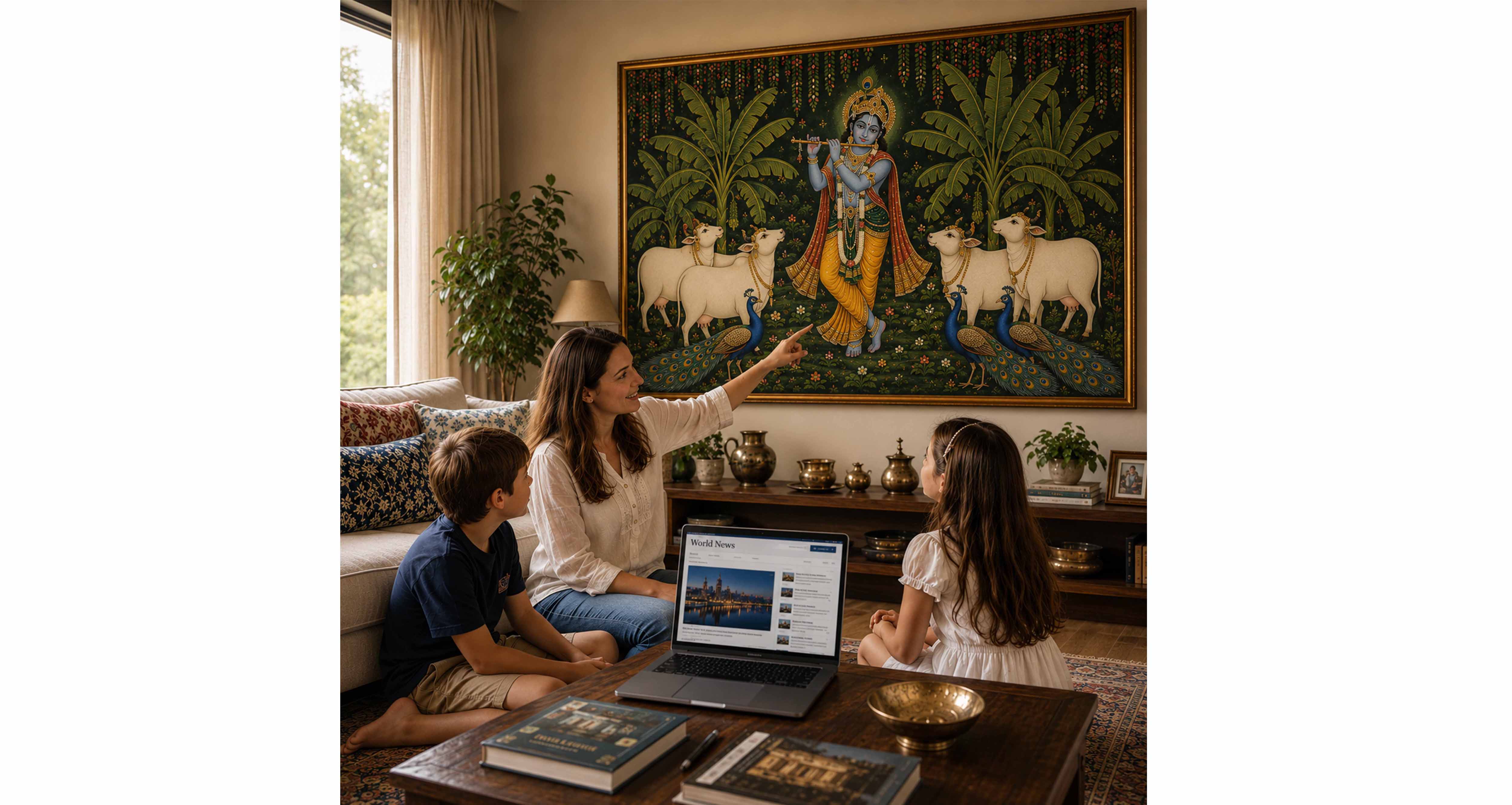
Originating in Rajasthan, India, Pichwai art developed as a devotional tradition dedicated to Shrinathji, a cherished form of Lord Krishna. These magnificent paintings are celebrated for their intricate detail, graceful compositions, symbolic richness, and extraordinary craftsmanship.
Each Pichwai painting tells a story.
Through depictions of festivals, seasons, lotus ponds, sacred cows, divine celebrations, and spiritual symbolism, these artworks create visual narratives that transcend language and geography.
Today, collectors from around the world admire Pichwai paintings not only for their artistic excellence but also for their ability to bring spiritual elegance into contemporary interiors.
As global appreciation for heritage art continues to grow, Pichwai paintings stand as remarkable examples of how traditional craftsmanship can remain relevant in the modern world.
Sacred Art and Interior Design
Luxury interior design increasingly emphasizes meaning alongside beauty.
Designers and homeowners are seeking artworks that contribute emotional and cultural depth to living spaces rather than serving as mere decoration.
Sacred art naturally fulfills this role.
Whether displayed in a grand residence, boutique hotel, meditation retreat, executive office, or private gallery, sacred paintings create focal points that evoke serenity, sophistication, and timeless beauty.
Their presence enriches interiors by introducing a sense of history, symbolism, and spiritual refinement that contemporary decorative trends often lack.
The Universal Language of the Sacred
One of the most remarkable qualities of sacred art is its ability to transcend cultural boundaries.
A viewer does not need to belong to a particular faith or tradition to appreciate the beauty, harmony, and emotional resonance of a sacred artwork.
People from different countries, cultures, and backgrounds are often moved by the same qualities—grace, devotion, craftsmanship, and symbolic richness.
This universal appeal explains why sacred art continues to find admirers across continents.
In a world that is increasingly interconnected, sacred art reminds us of the values that unite humanity: beauty, reverence, creativity, and the search for meaning.
Looking Toward the Future
Technology will continue to evolve.
Artificial intelligence will become more sophisticated. Digital experiences will become more immersive. New forms of communication will emerge.
Yet the human desire for meaning, beauty, and spiritual connection will remain unchanged.
Sacred art answers these enduring needs in a way that technology alone cannot.
It invites contemplation in an age of distraction.
It preserves heritage in an era of constant change.
It celebrates craftsmanship in a world of automation.
Most importantly, it reminds us that beyond the screens and systems of modern life, there remains a profound human longing for connection with something timeless and transcendent.
Conclusion
Sacred art matters in the digital age because it offers what the modern world often lacks—depth, authenticity, cultural continuity, and spiritual presence.
As technology reshapes daily life, traditional sacred artworks continue to provide a powerful connection to humanity's highest ideals. They preserve history, inspire reflection, enrich interiors, and create meaningful experiences that transcend generations.
For collectors, art enthusiasts, and admirers of cultural heritage, sacred art is not merely a relic of the past.
It is a living expression of beauty, devotion, and timeless wisdom—more valuable today than ever before. Thank You 🌷🌷
Arun Sharma
Pichwai Painting Artist
Contact- +91 72969 76088 (WhatsApp)